


 Sign in


 FXR BattlesPricing
.png)
Most traders journal. Few do it with structure. Even fewer understand that journaling in backtesting and journaling in live trading serve completely different roles.
If you treat them the same, your growth stalls but if you separate them properly, you build a measurable edge and execute it with confidence.
This distinction is where serious traders pull ahead.
Trading without journaling is trading blind because without data, you’re relying on memory, and memory is biased.
Journaling turns trading into a measurable performance system.
It answers:
If you’re already using a trading journal built for structured review, you can track trades automatically, analyze performance, and refine your process in one place.
But here’s the key: Backtesting journaling and live trading journaling answer different questions.
Understanding that difference changes everything.
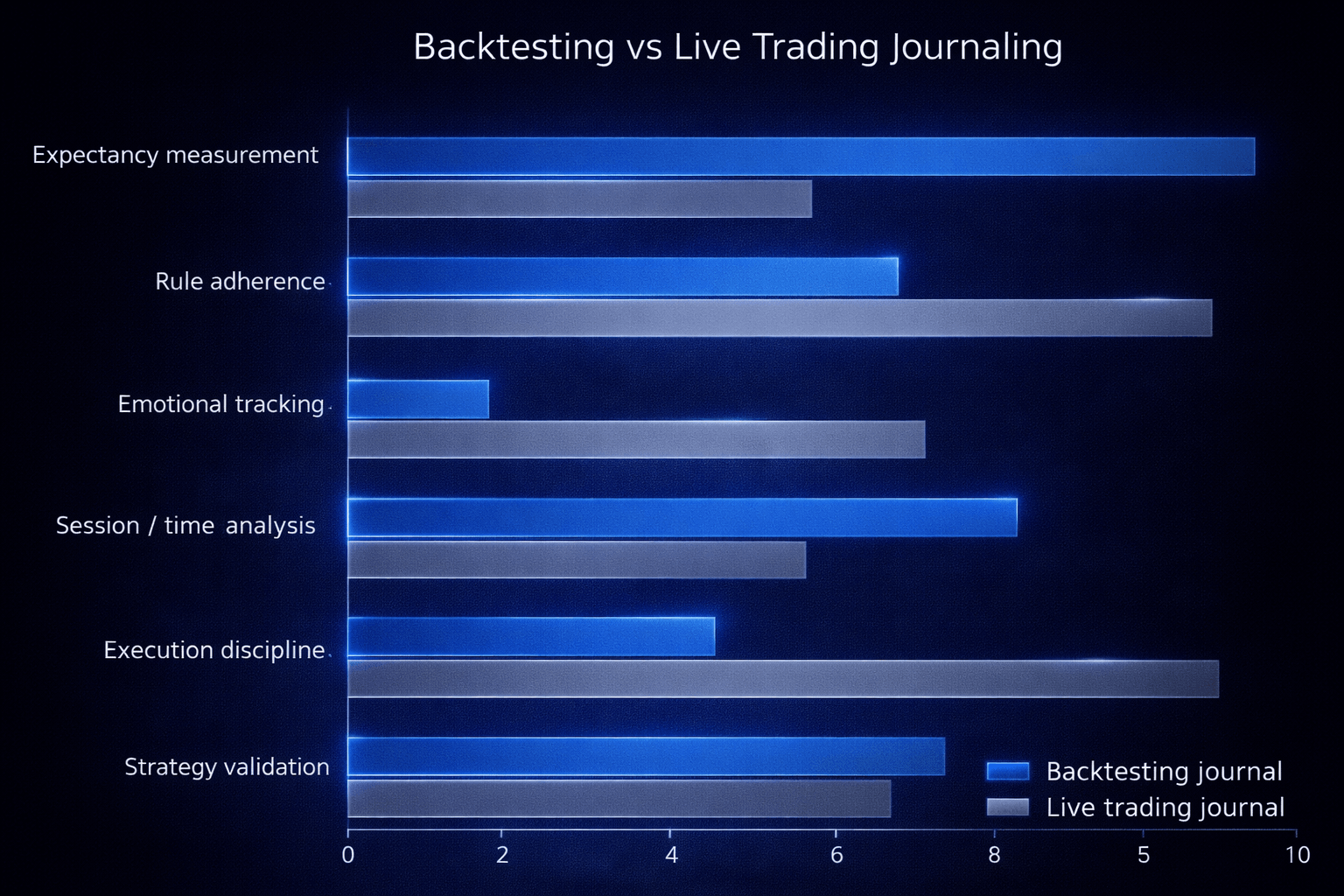
Backtesting is your research phase and where you build the foundation without financial risk or emotional interference, just structured testing.
Your objective here is simple: Validate your strategy with real data before risking capital.
Backtesting answers one question: Does this setup produce positive expectancy over a large sample?
Not over 10 trades. Not over 30 trades. At least 100 trades per setup.
Small samples mislead. Large samples reveal patterns.
This is where journaling becomes critical.
.png)
Your backtesting journal should focus heavily on metrics and context.
Track:
Backtesting journaling is about isolating variables.
You are identifying:
This phase builds data-backed conviction, which reduces hesitation later.
Learn how to structure this properly with: How to Journal Trades Inside FX Replay’s Trading Simulator.
One of the biggest advantages of replay-based backtesting is compression.
You can:
This is deliberate practice.
Without journaling, replay becomes random clicking but with journaling, every trade becomes feedback.
For a full process breakdown, read: A Full Backtesting Workflow Using FX Replay
Once your strategy is validated, the focus shifts. Now the question is no longer: Does this work?
It becomes: Can I execute it consistently under pressure?
Live trading exposes weaknesses that backtesting cannot because money introduces emotion, and emotion distorts execution.
Live journaling measures discipline because it audits behavior and highlights execution gaps between tested data and real performance.
This is where traders either evolve or stagnate.
Your live trading journal should focus on behavior and discipline.
Track:
Backtesting builds the system while live journaling builds the operator.
Many traders experience this:
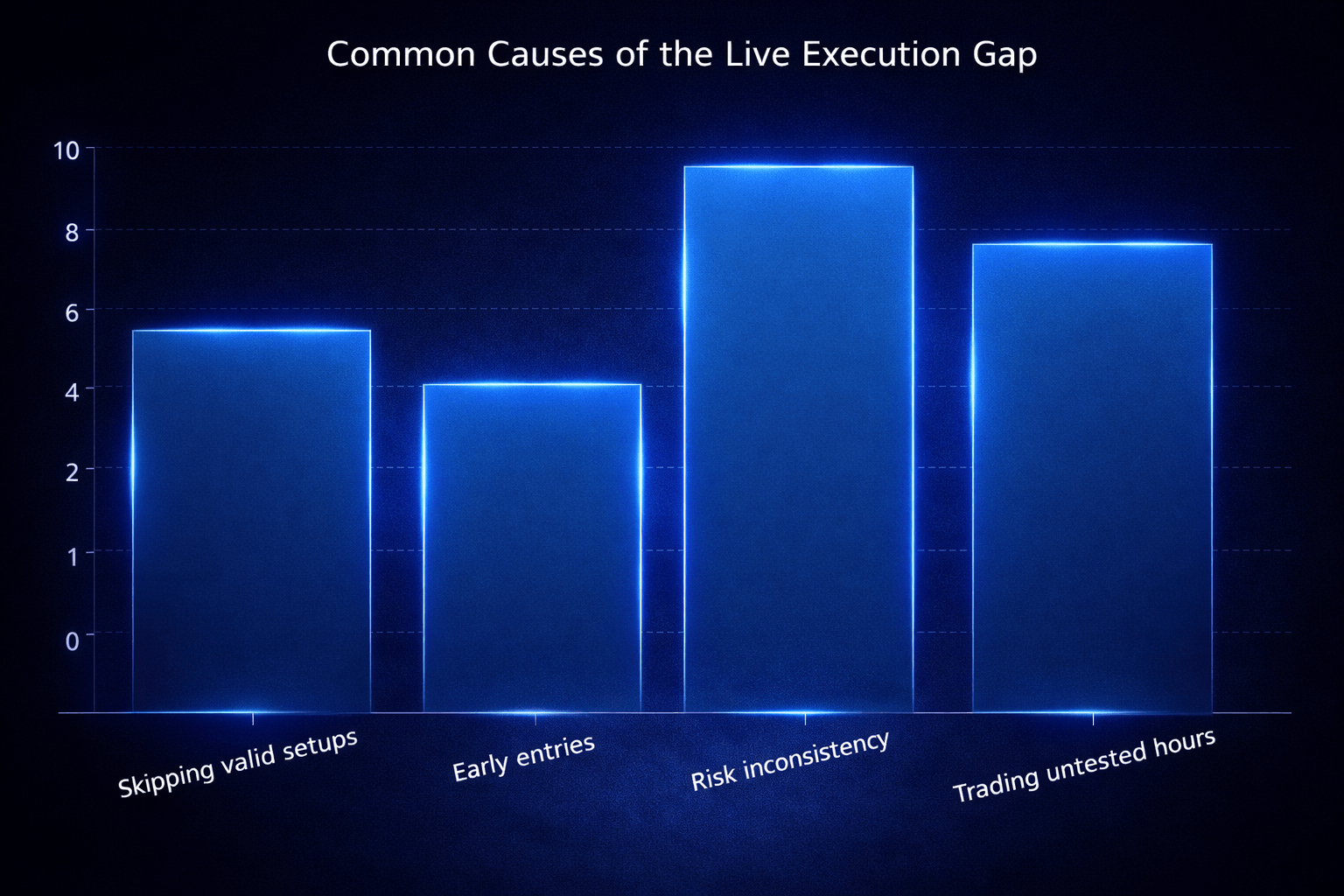
“My backtest shows strong performance. My live results don’t match.”
There are usually three causes:
Without journaling, you guess the cause but with structured journaling, you identify it precisely.
If your backtest shows a 55% win rate but live drops to 42%, you investigate:
Clarity comes from comparison.
And comparison requires clean data.
Use the FX Replay Trading Journal to track and review both backtest and live performance in one place.
This is where most traders lose control: they backtest in one place, trade live in another, journal manually somewhere else.
Data becomes fragmented and when data is fragmented, improvement slows down.
But there is a solution: integration. With FX Replay, you can sync your live trades directly into the FXR Journal.
When your live trades automatically sync into the same structured journal you used for backtesting:
Instead of switching platforms or using spreadsheets, everything lives in one system.
When synced properly, your live trades include:
From there, you can:
Now you’re not guessing why performance changed.
You can see it.
Most traders treat live trading and backtesting as separate worlds.
Professionals merge them.
When both datasets live inside the same journal:
That clarity builds confidence.
And confidence reduces emotional interference.
Here’s the structured path serious traders follow:
This creates a continuous feedback loop.
Backtesting improves the strategy while live journaling improves execution, and syncing both creates alignment.
Learn more: How to Use FX Replay’s Trading Journal
Inconsistency usually comes from:
When traders fail to sync and compare performance, they rely on assumptions.
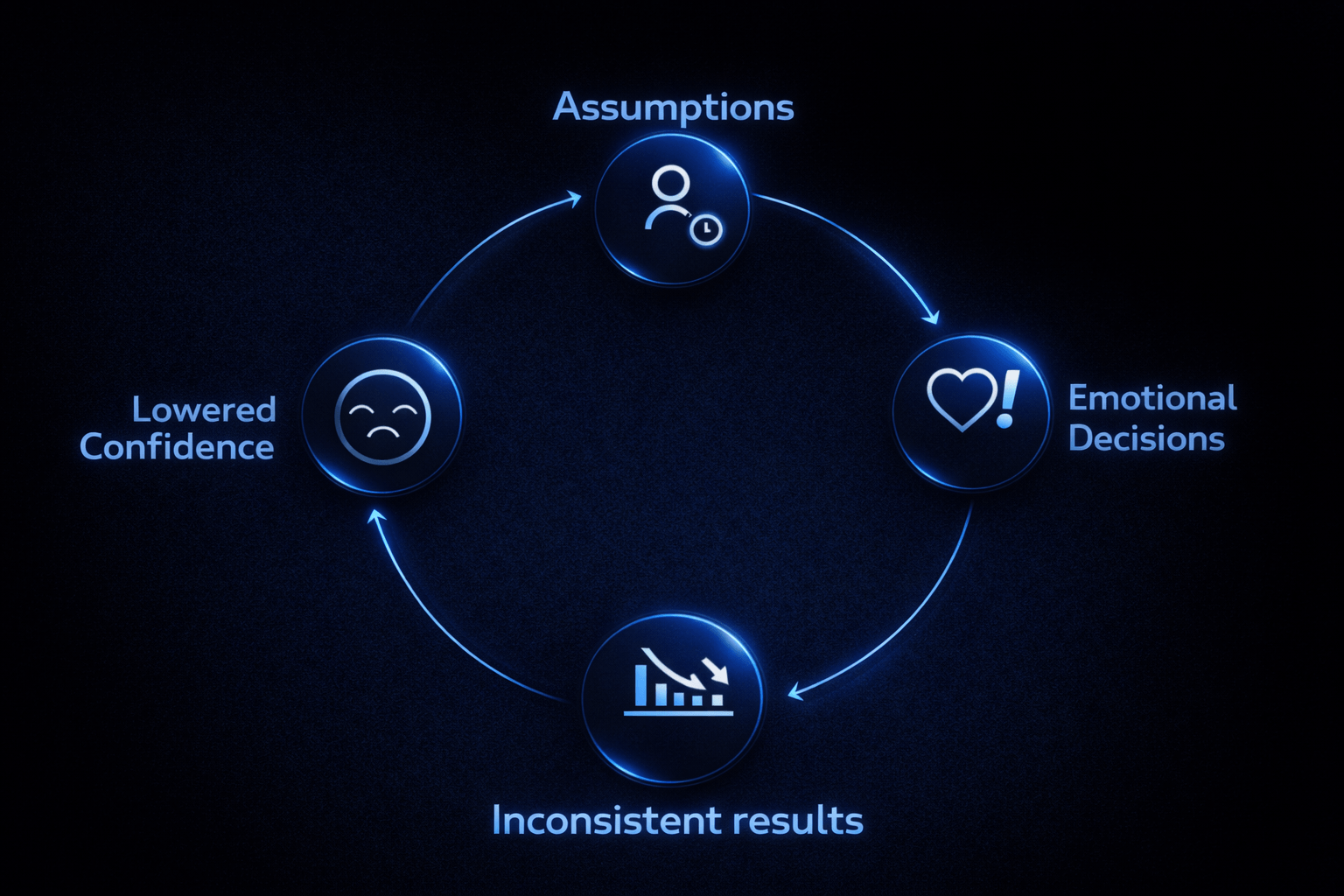
Integrated journaling replaces assumptions with data.
Backtesting journaling builds belief in your strategy while live trading journaling builds belief in your execution.
Syncing your live trades into the FX Replay journal connects both worlds.
That connection:
When data is unified, improvement becomes deliberate.
And deliberate improvement leads to consistency.
Couldn't find your question here?
Go check out our Help Center below!
Backtesting journaling validates strategy performance. Live journaling evaluates discipline, execution, and psychological consistency.
Syncing removes manual logging errors, centralizes performance data, and allows direct comparison between backtested and live results.
At minimum, 100 trades per setup. Larger samples improve statistical reliability and drawdown expectations.
Weekly comparisons are ideal. Monthly deep reviews help identify broader performance shifts.
Yes. When you see clear data comparing execution to backtested performance, emotional reactions decrease and discipline improves.
.png)
.png)